• Home
  • Paintings
    • paintings
    • small paintings
  • Installations
  • Commissions
  • About
  • Instagram
  • Blog
  • Contact
  • Menu

Marcia McMillen | Artist

  • Home
  • Paintings
    • paintings
    • small paintings
  • Installations
  • Commissions
  • About
  • Instagram
  • Blog
  • Contact

When Stillness Moves

The Long Journey to an Artistic Voice

July 23, 2026

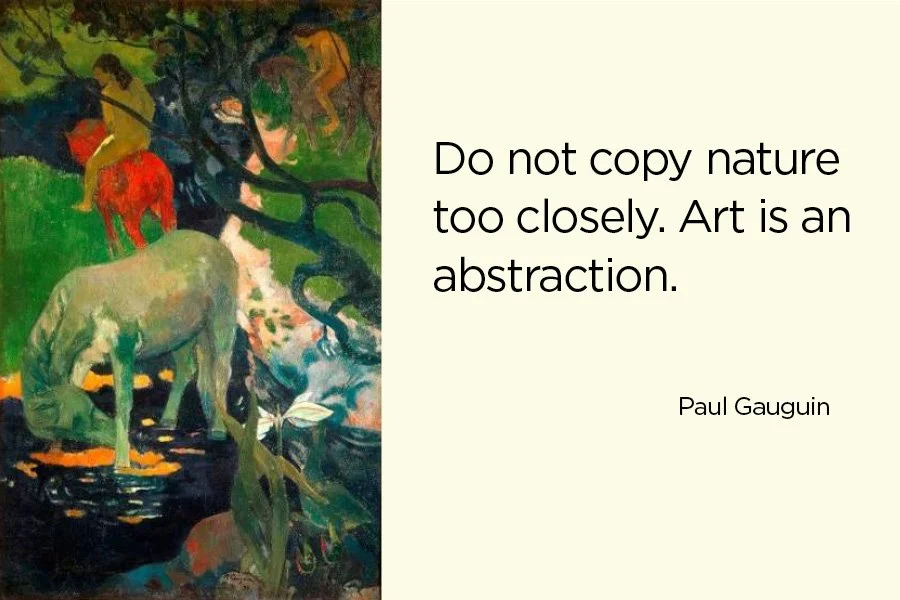
I recently finished Wild Thing: A Life of Paul Gauguin by Sue Prideaux, and I highly recommend it. Drawing from newly uncovered primary sources, including the resurfaced manuscript of Gauguin's most important writing and the previously untranslated memoirs of his son, Sue Prideaux challenges many long-held assumptions about the artist and his life.

What stayed with me wasn't just Gauguin's paintings, but the way each chapter of his life shaped his artistic voice. As artists, we don't create in isolation. Every experience, every place, every relationship leaves its mark on our work.

Gauguin was born in France in 1849, but at just eighteen months old moved with his mother and sister to Lima, Peru, where he was surrounded by a rich visual culture. As a young man, he traveled the world as a merchant marine before becoming a stockbroker. He was largely self-taught as a painter and spent years among the Impressionists before discovering his own distinctive voice. It wasn't until he immersed himself in the culture of Brittany that his work began to take on the symbolism and simplified forms we recognize today. Later, his travels to Panama and eventually Polynesia continued to transform his artistic vision.

One detail I especially enjoyed was how artists supported one another. They shared ideas, traded paintings, and encouraged each other's work. Theo Van Gogh, the art dealer and brother of Vincent Van Gogh, represented Gauguin's work, and Vincent admired his paintings enough to invite Gauguin to the south of France. Before Gauguin arrived, Vincent began what would become his famous sunflower series, ultimately completing fifteen paintings. They were created as a welcome and tribute to Gauguin, whose Peruvian heritage connected him to the ancient Incan sun symbol, the sunflower. Knowing that these iconic paintings were made specifically for another artist gives them an entirely new meaning.

Like many artists, Gauguin believed that changing his surroundings could change his work. He traveled to Tahiti hoping to find an untouched culture, only to discover that French colonialism had already transformed much of the island. He became an advocate for the Tahitian people while continuing to paint. After a brief return to Paris, he returned to Tahiti and later settled in the Marquesas Islands. Gauguin died there in 1903 at the age of fifty-three. For years, many believed he died from complications of syphilis, but modern DNA analysis of his teeth found no evidence of the disease, challenging another long-standing myth about his life.

Reading this biography reminded me that artistic growth is rarely a straight line. It comes from curiosity, travel, relationships, setbacks, and the willingness to keep searching. Gauguin's journey also reminds me that finding your creative voice takes time. Every season of life contributes something, even when we don't recognize it in the moment.
Comment

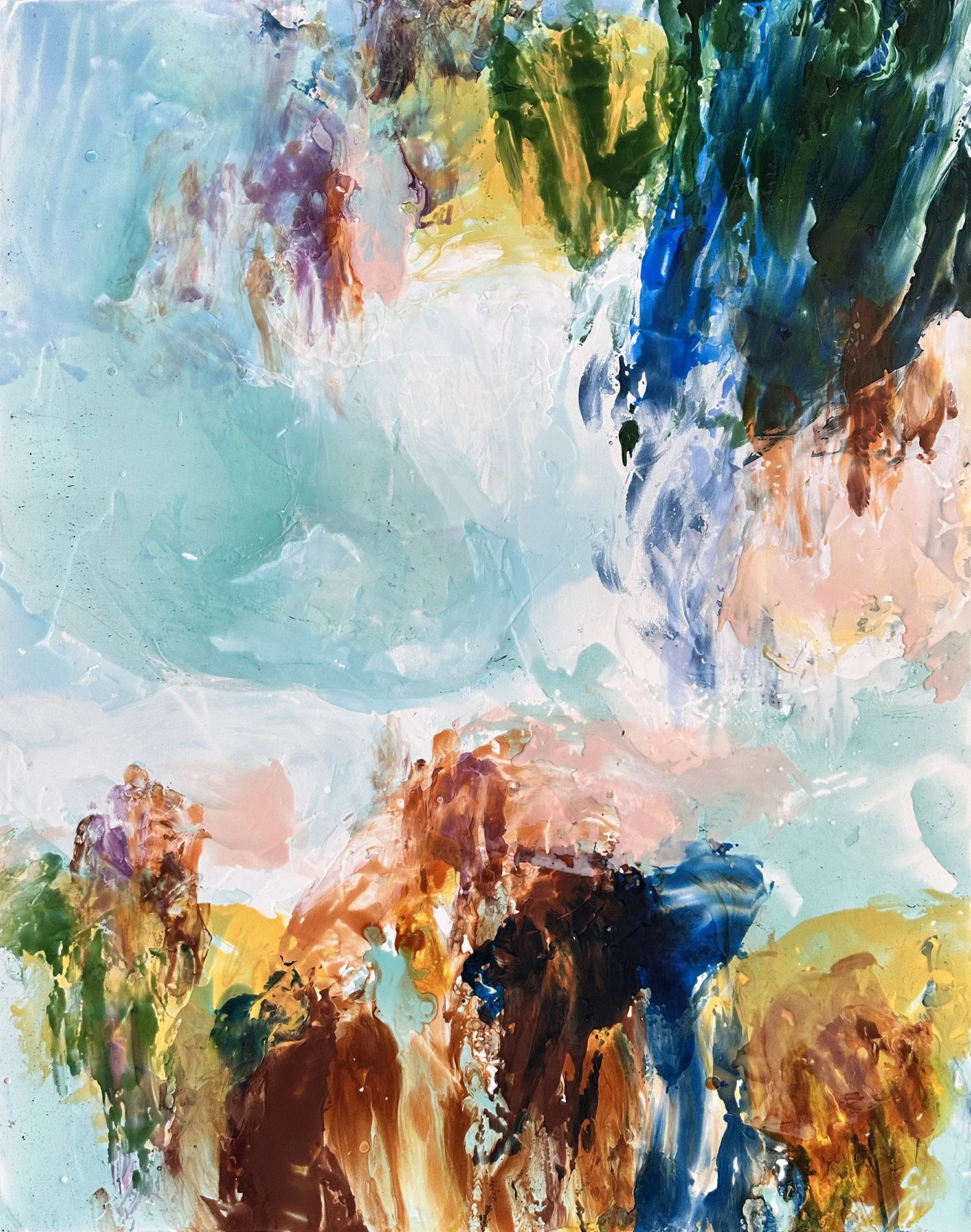
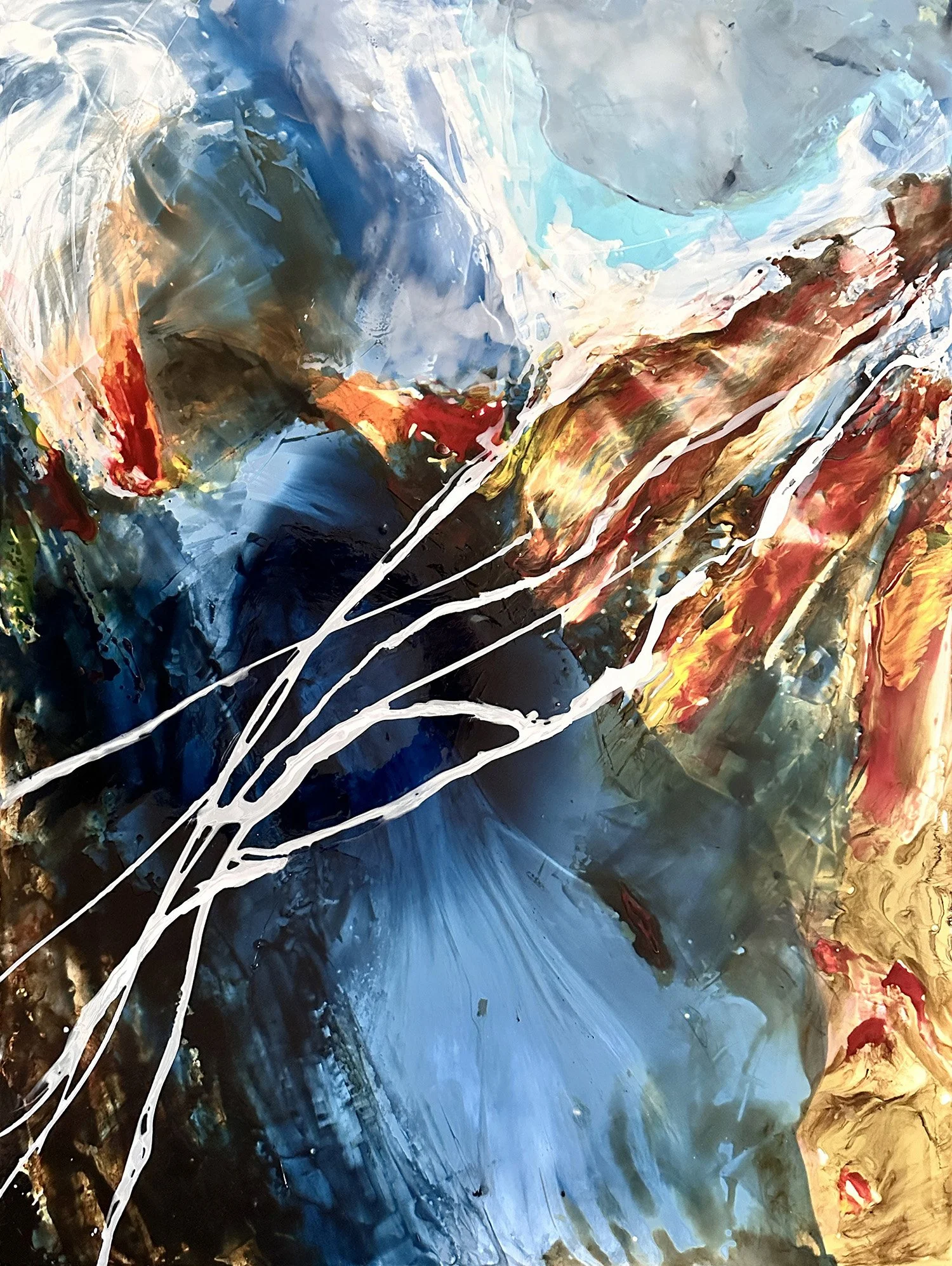
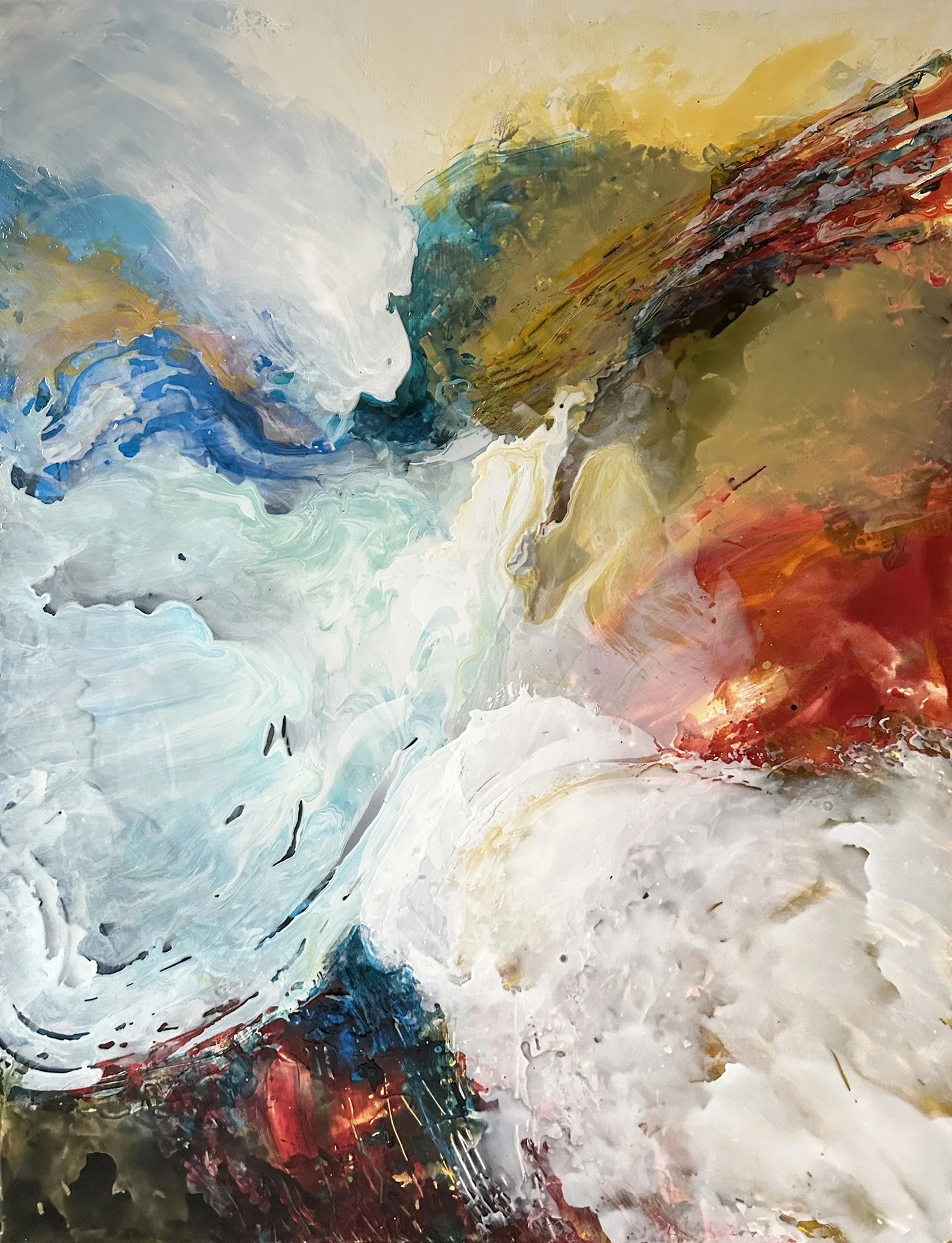
Amalgamation 36”x48”

SEEING ABSTRACTLY

June 26, 2026

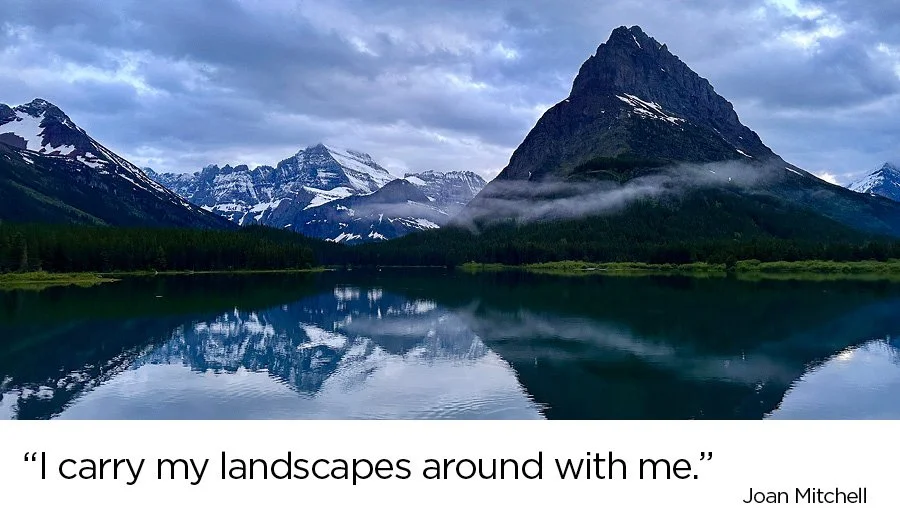
One of the joys of traveling is seeing the world with fresh eyes. During a recent trip to Glacier National Park, I found myself looking beyond the grandeur of the mountains and paying attention to the details that often go unnoticed.

The first day was wrapped in rain and mist, with clouds hiding portions of the peaks. As the weather cleared over the next several days, sunlight revealed bold rock formations, colorful shadows, and calm lakes that mirrored the landscape almost perfectly. Each evening the fog drifted back in, transforming the same mountains into something entirely different.

As a painter, these changing conditions were far more interesting than a perfect postcard view. I kept noticing abstract compositions everywhere. Layers of atmosphere softened the mountains. Reflections blurred the boundary between sky and water. Bands of color appeared in the rock faces, and every shift in light created a new relationship between shape, color, and space.

Experiences like this rarely led me to paint a specific place. Instead, they deepen my visual vocabulary. Back in the studio, those memories become part of the painting process, quietly influencing the next layer of color and the next decision on the canvas.

Comment

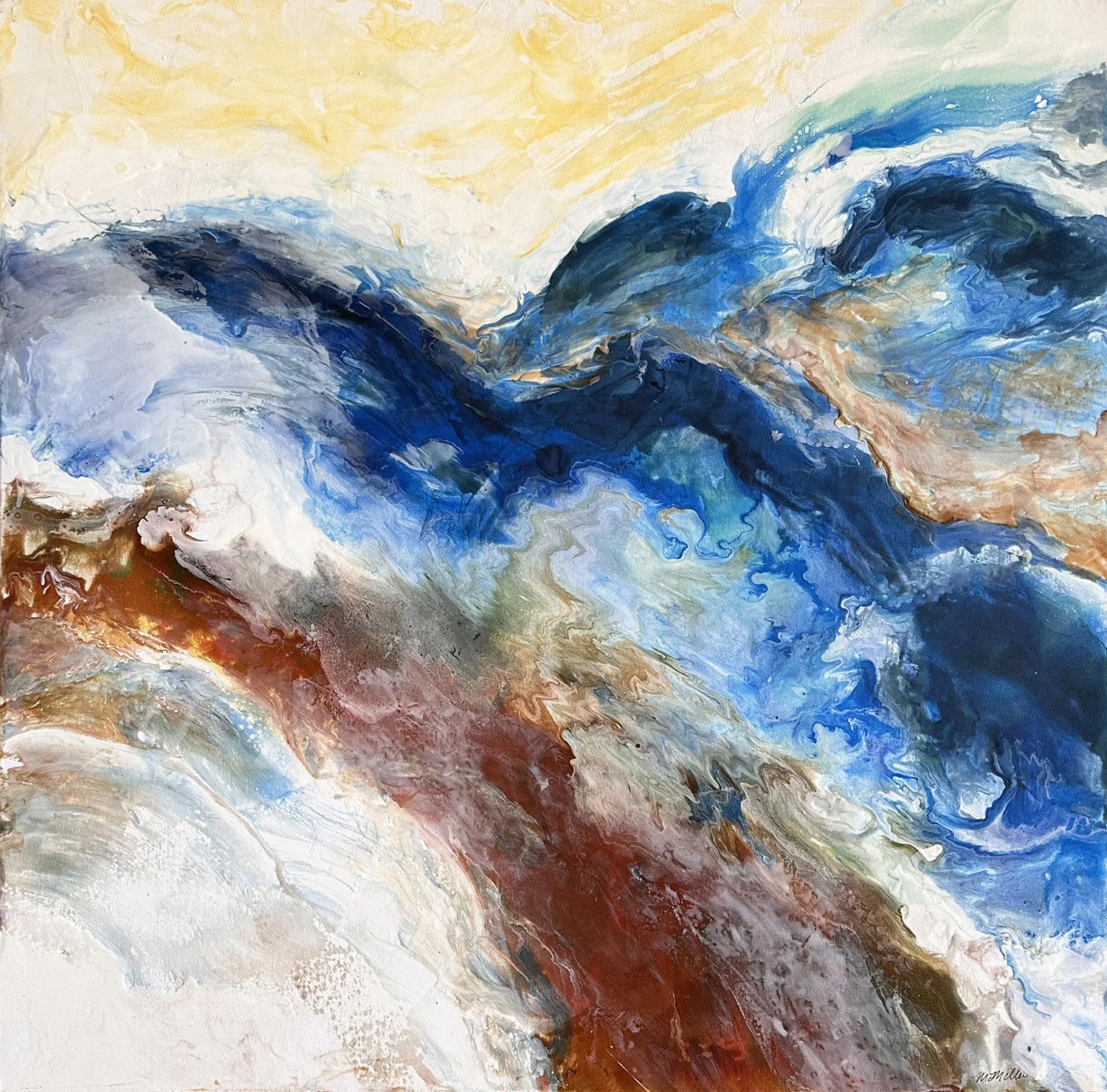
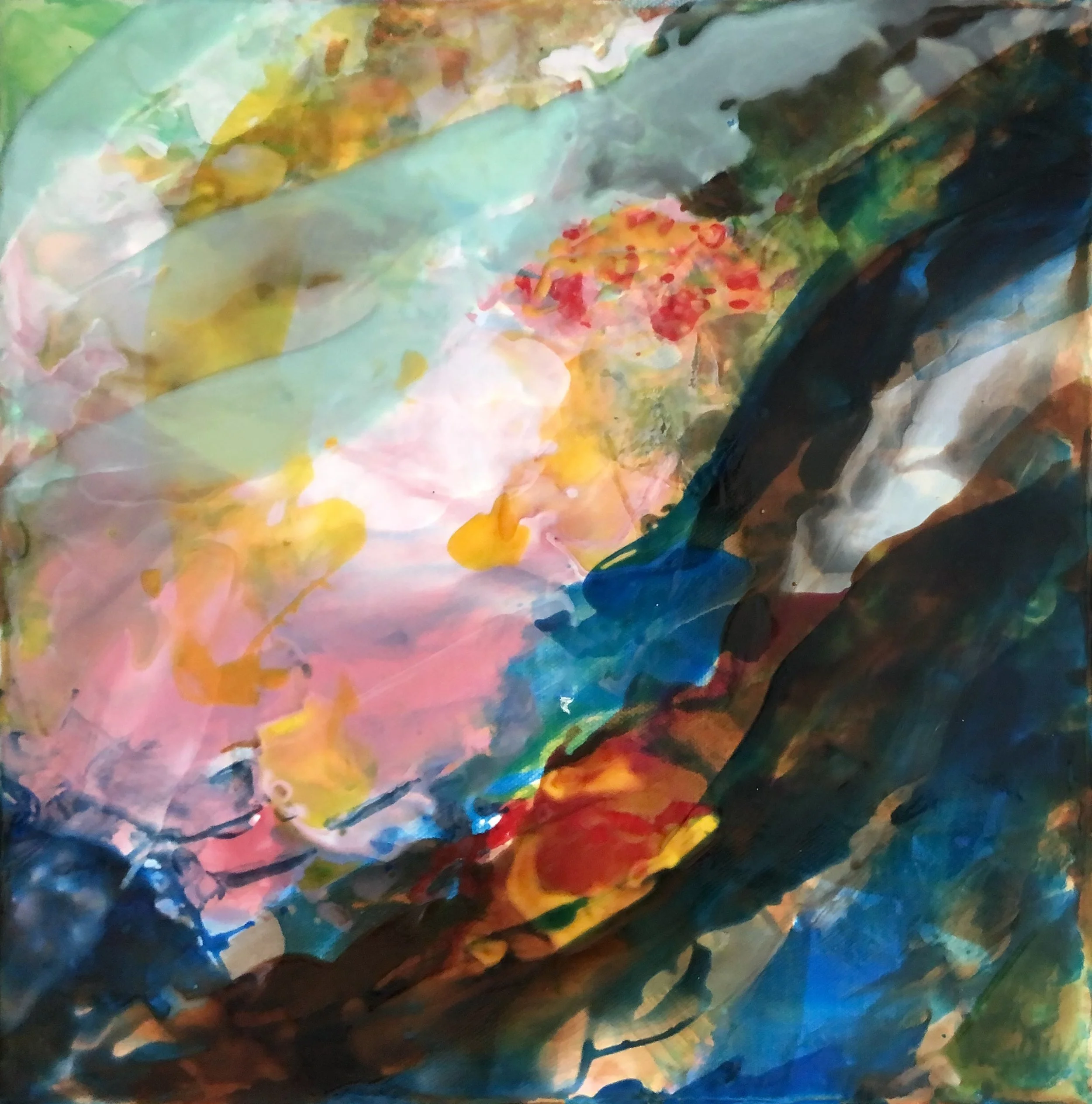
Jasper Coastline 36” x 36” acrylic on Canvas

THE NATURE OF CHANGE

May 15, 2026

“Jasper Coastline” grew out of an ongoing fascination with the ways nature shifts over time. Water moves with speed and force, while stone changes slowly, shaped through years of pressure, erosion, and movement beneath the surface. Both hold their own rhythm of transformation.

Inspired by the jasper stones found along the coastlines of Michigan’s Upper Peninsula, the painting reflects that quiet tension between permanence and change. Jasper is also found throughout the American landscape, particularly in places such as Oregon, Idaho, California, and Arizona, where volcanic activity and mineral-rich earth have shaped its formation over time.

In life, some transitions arrive clearly and all at once. Others unfold gradually, almost invisibly, asking us to trust what is still taking shape.

This week, “Jasper Coastline” is being shipped to collector David Rodarte in Arizona, whom I have known for many years. There is something meaningful about knowing the painting will continue its journey across another landscape where Jasper itself has long existed, carrying its own history of movement, change, and endurance.

Comment

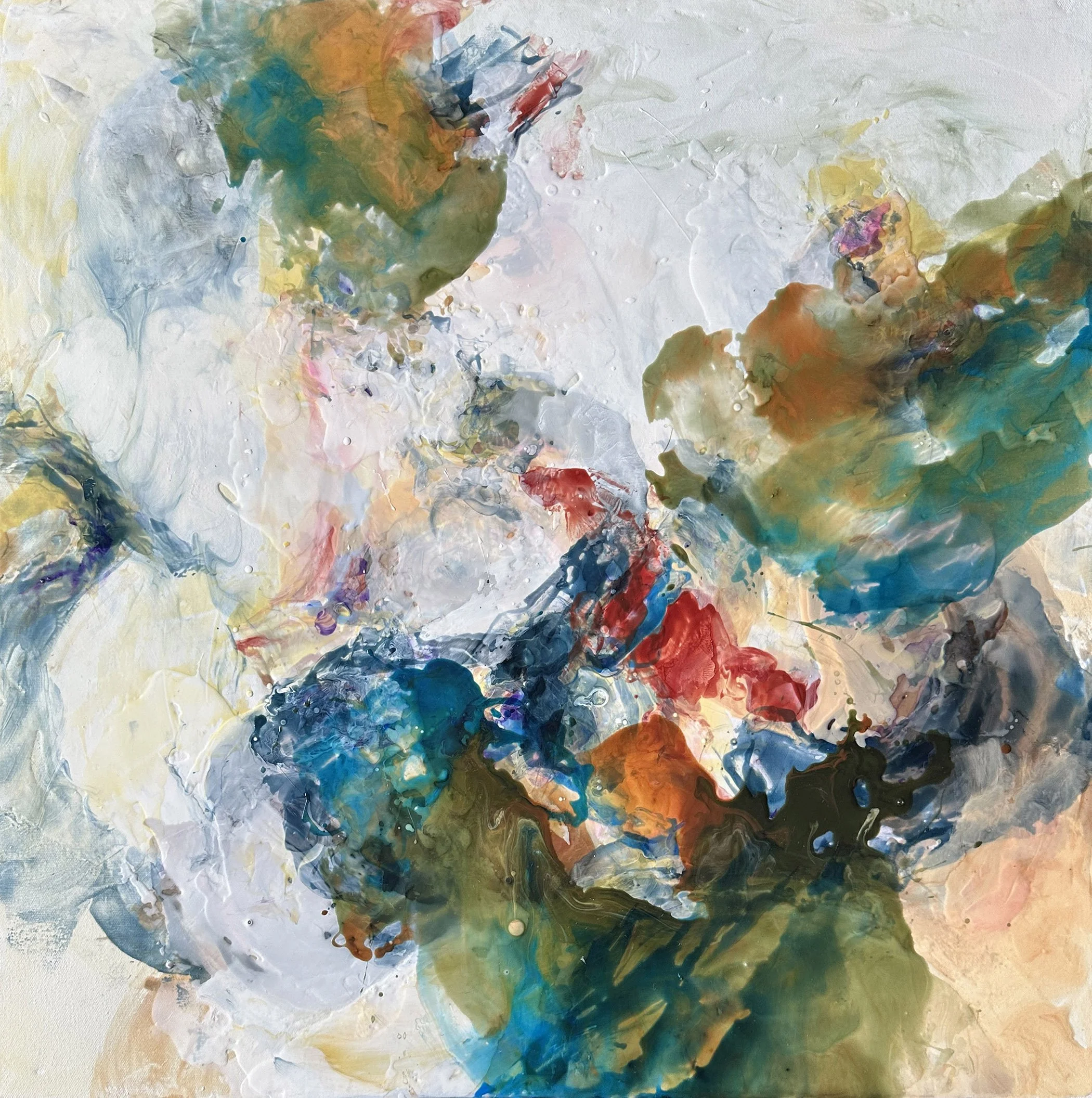
Counterpoint - 24”x24”

A ROOM TO CREATE

April 24, 2026

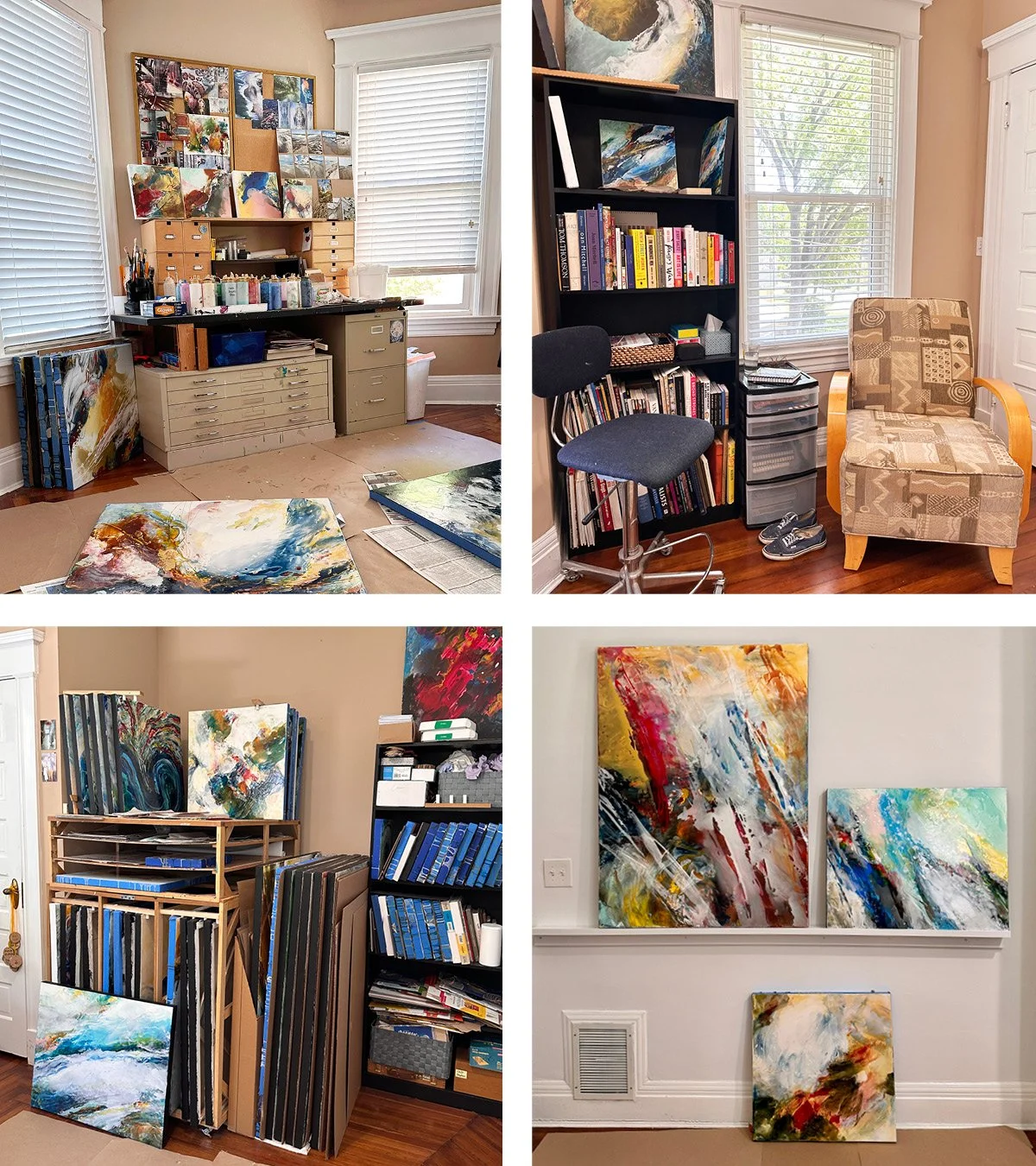
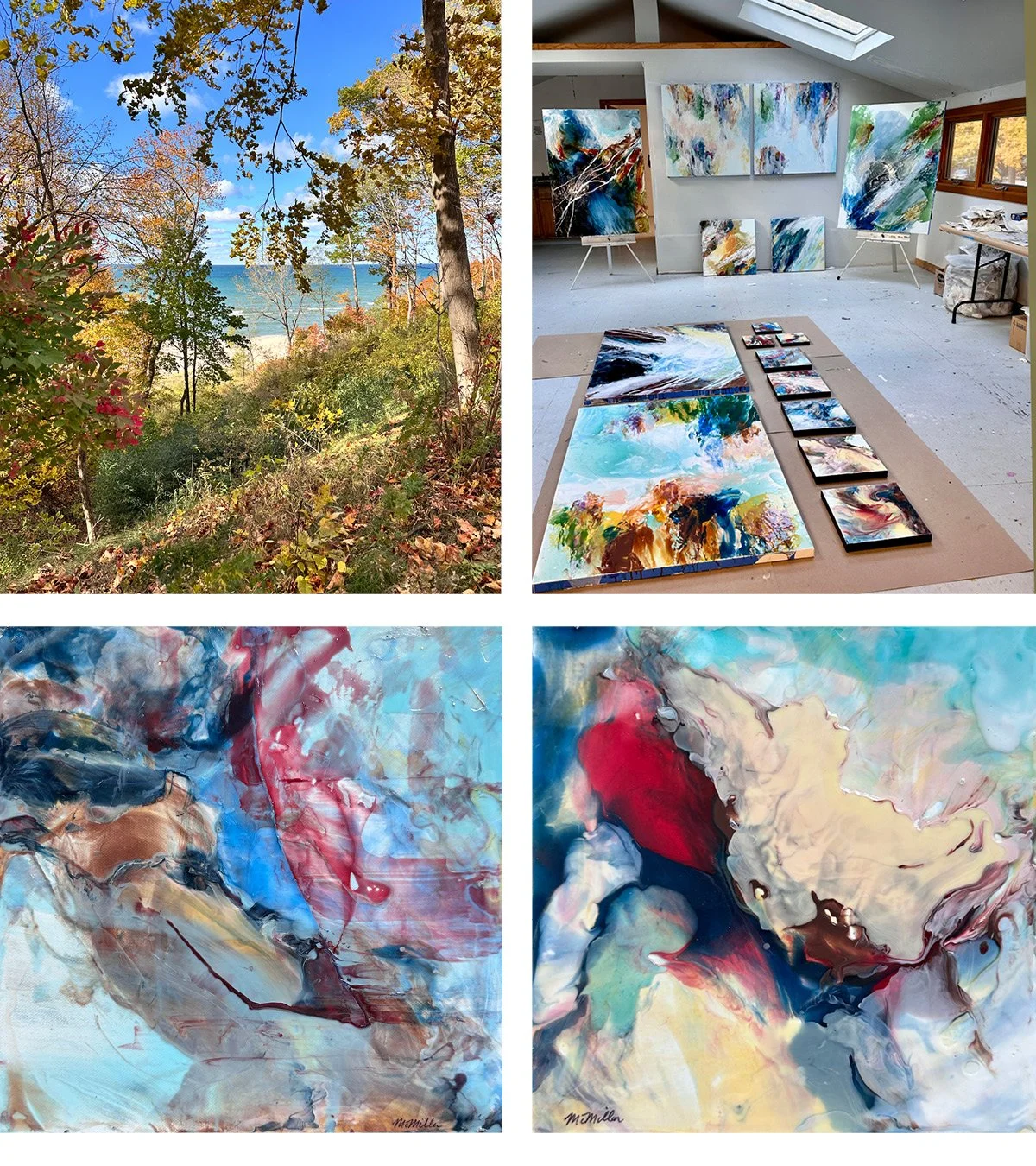
A couple of months ago, my friend Jackie Slone led a lively conversation about artist studios and suggested that they are sacred spaces. I agree. In my own studio, there is a shift when I enter, a quiet awareness that this environment is set apart, offering a calm that is essential to the work.

My studio is not large, yet it feels clearly defined. It sits outside the pace of daily responsibilities, removed from distraction and obligation. Stepping inside has become a rhythm of its own. Over time, that consistency has created a threshold into the work. This is where ideas develop, where uncertainty is given room, where something begins to change. It is not only about making. Something in me is also being formed.

The placement of materials, the presence of objects, and the scale of the room all play a role. A tabletop holds my paints and materials, with a curated pinup board above it filled with color references and photographs I have taken of water and nature. A gallery wall allows me to live with works in progress and study them over time. Smaller paintings and color studies are placed throughout the room, creating a quiet sense of continuity. A bookshelf with my favorite art books sits beside a comfortable chair, a place for reading or for considering next steps. Drying racks and storage keep the work moving forward. A large window brings in steady natural light and fresh air, shaping how I see color and surface. The studio becomes intertwined with the work itself. It supports concentration and allows me to stay with a painting long enough to understand what it needs.

If you would like to see the space and the work up close, you are welcome to visit the studio. I am happy to arrange a time that works for you.

Comment

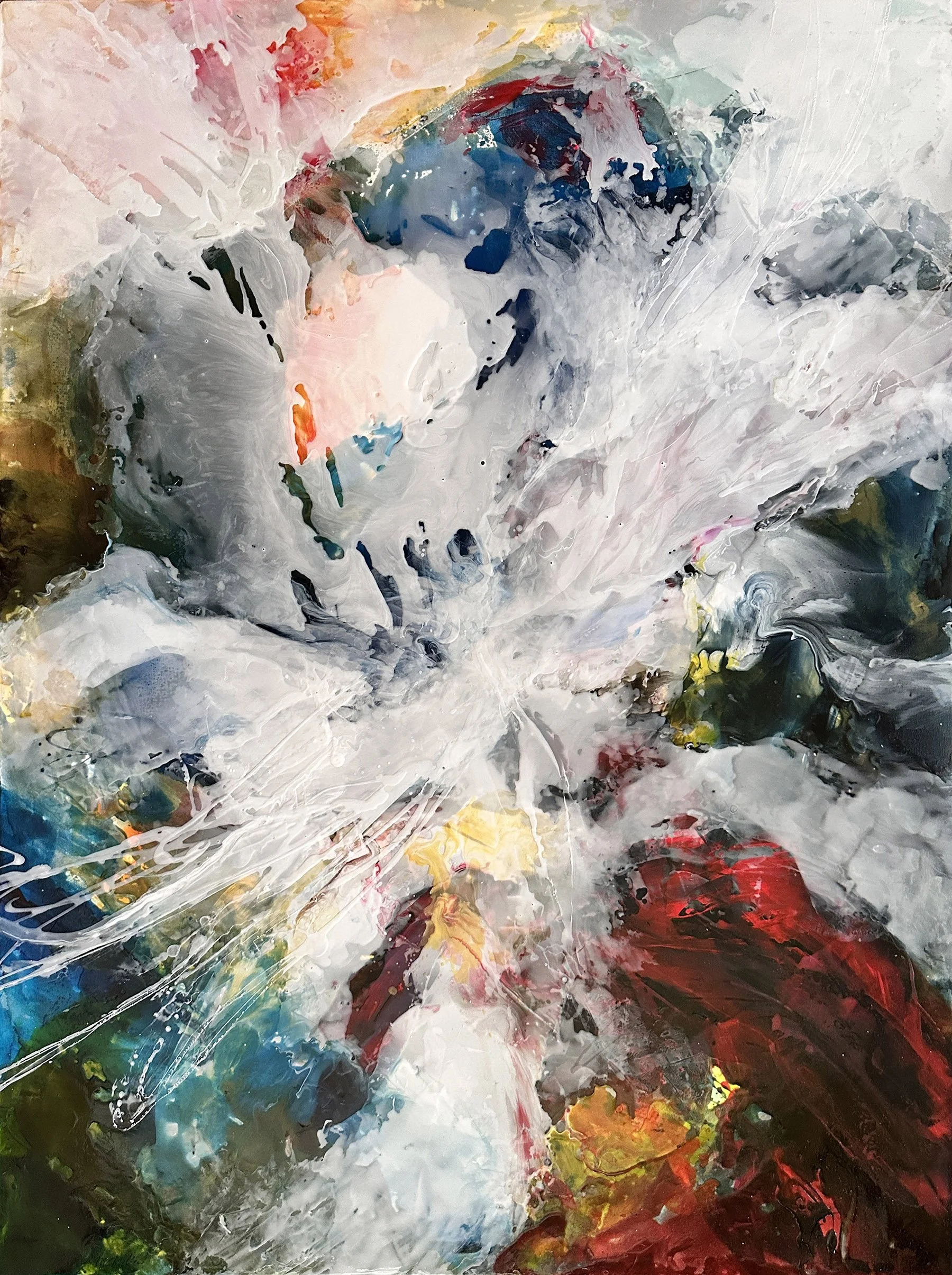
Held for a Moment 36”x48”

From Kentucky to Paris: A Grant Journey

February 19, 2026

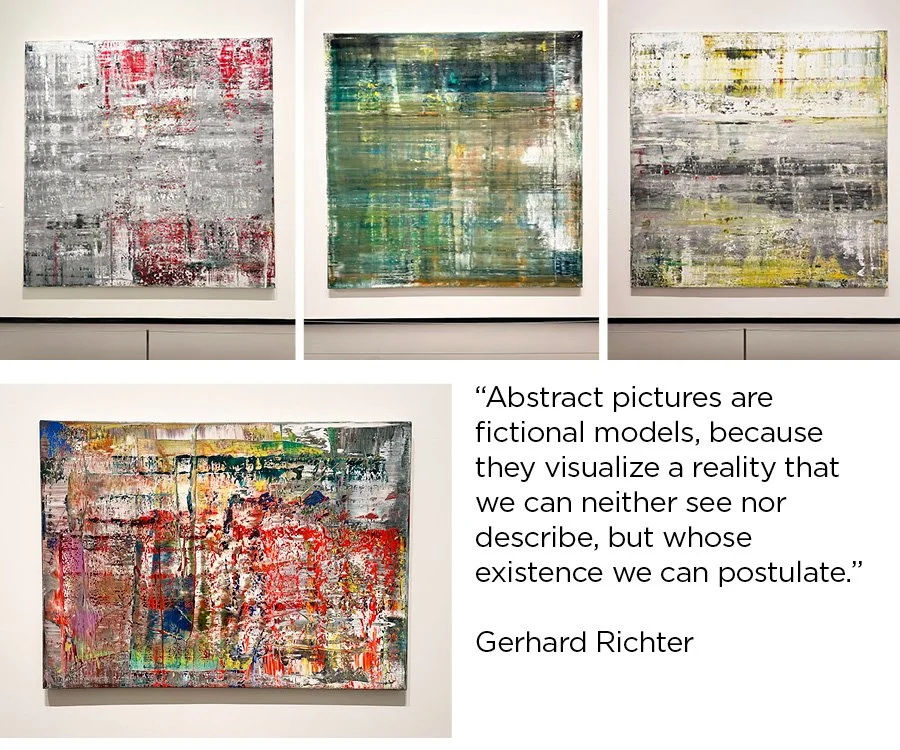
In the first week of February, I traveled to Paris to see the Gerhard Richter retrospective at Fondation Louis Vuitton. I am deeply grateful to the Great Meadows Foundation for awarding me an Artist Professional Development Grant that made this possible. The grants support Kentucky artists by funding travel outside the state to experience work firsthand, then return home with insights that directly impact their practice. It is an investment in both the artist and the creative life of our region.

Richter’s work spans decades and moves between representation and abstraction. I have long been drawn to his abstract paintings, though I had only seen a few in person before this trip. To stand in front of so many at once was powerful. He paints from photographs, blurs images until they feel like memory, then shifts into large abstract works built through layers of paint pulled across the surface. Across more than 270 works, you see a painter continually testing what painting can do.

I viewed the exhibition over two days, which deepened my experience. On the first day, I absorbed the scale and breadth of the work. Returning the next day allowed me to slow down and look with greater clarity. Paintings that initially felt distant began to connect. I noticed relationships the curator was guiding us toward through proximity and contrast. I began to recognize how one body of work informs the next, and how decisions in one period echo decades later.

The watercolor and ink drawings were among the most inspiring for me. Their immediacy and sensitivity resonated deeply. They reminded me of the importance of touch and responsiveness and affirmed my desire to bring more of that directness into my own practice.

While in the galleries, I documented my responses to specific works that resonated. This exhibition strengthened my commitment to experimentation, to accepting uncertainty, and to allowing change within the painting. It affirmed that a sustained practice can evolve dramatically while remaining coherent.

The impact of this experience will stay with me for years, shaping not only the paintings I make next, but how I think about the long arc of a creative life.

Comment

THE QUIET PRACTICE OF JOURNALING

January 09, 2026

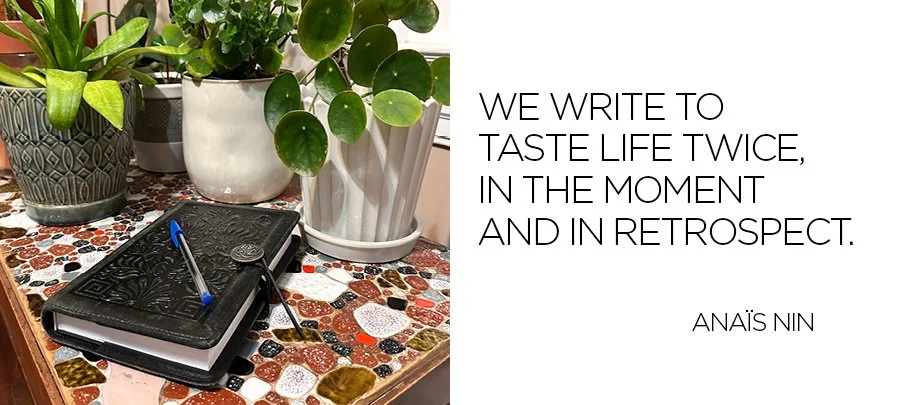
Each new year begins the same way for me: a blank page and a pen. The practice is journaling. I have been writing consistently for twenty years, using the page to process my thoughts, record days and events, and notice what keeps resurfacing in my thinking. It functions a bit like self-therapy. I try to stay positive, though sometimes I need to vent. Writing things down helps me understand what is really going on. I prefer to write in the morning, and the length varies. Sometimes it is a couple of paragraphs, sometimes a few pages. I do not concern myself with how the writing sounds. The value is in the act of writing itself. There are no rules. Just show up and write.

 From time to time, I look back and recognize patterns or insights that were not obvious in the moment. When I start a new journal, I dedicate the first pages to reflecting on what I have learned, what I am still working on, and what feels new or important to explore in the year ahead.
 Both my own experience and research point to similar benefits. Writing regularly can reduce stress, increase self-awareness, support emotional regulation, and strengthen resilience. I experience these effects in quiet but meaningful ways, greater clarity, a steadier emotional center, and more room to think. Journaling does not need to be polished or profound. A simple notebook is enough to begin. What might surface if you gave yourself a few minutes to write without expectation or outcome

Comment

LETTING GO TO MOVE AHEAD

December 11, 2025

As the year draws to a close, I’ve been thinking about the quiet work of letting go. Rick Rubin writes about how every creative process asks us to release something—an idea, a direction, or a belief—to make space for what the work truly needs. I felt this deeply during my artist-in-residence in October.

I created Bridge the Seasons surrounded by shifting light, where water and land met at the edges, and with the rhythm of fall leaning toward winter. The landscape has always influenced my work, but this time the seasons felt as if they were moving through me. What began with a clear plan shifted quickly; the painting called for more emotion. When I let go of the earlier direction, the entire composition found its purpose.

As we step toward a new year, I’m noticing how endings and beginnings often overlap. Something loosens just as something else arrives. Letting go doesn’t have to be dramatic—it can be a quiet release, a small shift, a pattern we’ve simply outgrown.

Lately, in the studio and in my own life, I’ve been sitting with one guiding question: What do I need to release so the next version of my work—and my life—can emerge? It’s a question worth carrying forward. Sometimes the smallest release opens the widest path.

As we move toward the new year, may you find the quiet moments to release what no longer serves you, and the space to welcome what’s next. Wishing you a season of creativity, presence, and gentle growth.

Comment

Simplicity = Freedom

November 13, 2025

Sometimes the simplest things bring the greatest freedom.

During my recent three-week artist residency, I experienced that freedom in the rhythm of each day — painting, walking along the shoreline, and watching fall transform everything around me. The shift in season wasn’t just something to witness; it moved through me and into the work.

The trees let go of their leaves, revealing their structure — bare, strong, and honest. I felt a parallel within myself as I stripped away what was no longer needed in the studio. Each stroke of paint became an act of release, a way of finding clarity through color and form.

The large studio allowed me to move easily between canvases, responding to what the day revealed — a flash of gold light through the window, a gust of wind carrying the scent of wood smoke. Each day began in the studio, painting with no interruptions, then walking the beach to see how the storms had changed the sand and stones overnight. The weather turned cooler, the colors deepened, and the air carried that sharp scent that only comes with fall. The shifts outside stirred something in my work.

The shoreline changed constantly — sand reshaped, stones gathered in new patterns, and each walk revealed something altered and alive. Those transformations found their way into my paintings — layers scraped back, rebuilt, and reimagined.

At night, I’d sit by the fire and think about how nature continually rebuilds itself. The flames flickered, and I began to see that simplicity isn’t stillness; it’s movement pared down to its essence.

The experience reminded me how essential it is to allow change into the creative process. Just as the trees shed their leaves, I learned to let go of expectations and trust what was emerging. That release felt like freedom.

Comment

Life is a Process

September 11, 2025

A Reminder on Finding Happiness
I recently listened to an episode of A Bit of Optimism with Simon Sinek, featuring Arthur Brooks, the Harvard professor and author who teaches one of the most popular courses on happiness. The discussion was lively, and a few ideas really struck me.

Brooks breaks happiness into three parts: enjoyment, satisfaction, and meaning. But what I kept returning to was their conversation about the process. True happiness, they said, isn’t about achieving milestones or checking boxes—it’s found in the daily unfolding of life: in the small acts of growth, in challenges that stretch us, and in moments that deepen our connection to ourselves and others.

Hearing this was a welcome reminder for me — it calms me, grounds me, and brings a quiet sense of happiness.

Link to podcast

Comment

Blanket 12”x12”

LEAVING SPACE FOR WONDER

August 15, 2025

Magic often hides in the moments we never saw coming.

Last week, I visited my sister in the Portland area. Normally, when I travel somewhere new, I make a plan, map things out, and try to see everything. This time, I didn’t. I simply showed up.

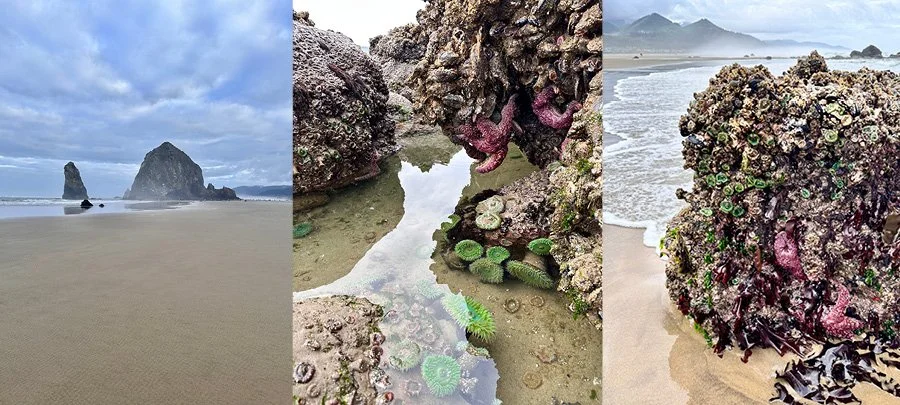
Knowing how much I love the beach, my sister suggested we take a short trip to the coast. On our first day at Cannon Beach, someone mentioned that the next morning’s tide would be the lowest of the season—at 5:30 a.m. I didn’t think much of it at the time.

But the next morning, I found myself walking along the shore just after sunrise. Off in the distance, Haystack Rock rose like a sentinel. Near its base, a surprising number of people had gathered. As I got closer, I saw why. The tide had pulled back to reveal a hidden world—tide pools filled with rocks, sea anemones, starfish, and swaying plant life. The colors, shapes, and textures were astonishing. Families crouched down to point out tiny creatures, volunteers shared stories and answers, and by mid-morning, all of it would be gone—tucked back under the ocean’s surface.

Moments like this are more than beautiful—they feed my work. The rhythms of nature, the shifting layers, the play of light and shadow all find their way into my abstract paintings. This low-tide morning gave me new colors to explore, new textures to layer, and a reminder that inspiration often arrives when I’m open to what the day has to offer.

Travel, and life, can be richer when we leave a little room for surprise.

Comment

“Helping Each Other” 48”x36”

FREEDOM TO CHOOSE

June 19, 2025

Last week, I visited Brilliant Exiles: American Women in Paris, 1900–1939 at the Speed Art Museum in Louisville—an exhibition that immersed me in one of my favorite eras for women and the arts. I’ve always been drawn to that early 20th-century moment, when creative boundaries were shifting and women were finding new ways to live and work. The show moved fluidly across disciplines—painting, literature, dance, fashion, publishing—highlighting how ideas flowed from one field to another. It reminded me that art doesn’t happen in isolation. It builds through conversation, experiment, and the freedom to make unexpected choices.

I went with an artist friend and her high school–age granddaughter. We each brought a different lens to what we saw, and in that mix of perspectives, something opened up. We talked about the pull of new places, how fresh surroundings can prompt fresh thinking—not necessarily dramatic change, but a loosening of the usual patterns. Being among so many portraits of women mid-process—in studios, on stage, at work—made me think about how the creative life allows for shifts and surprises. Sometimes what changes us most is simply the chance to see things differently

Comment

“HITTING THE SHORE” - 24x24

Uncovering a Forgotten Force: Margaret Fuller

May 30, 2025

Like many, I grew up recognizing names like Emerson, Thoreau, and Hawthorne—towering figures of American thought and the transcendentalist circle. But it wasn’t until recently that I discovered Margaret Fuller, a woman who not only moved among them but challenged and inspired them. Why didn’t I know her name? I suspect the answer lies in a pattern all too familiar: she was a woman who lived with intellectual force and personal freedom, and history often forgets women like that.

Fuller was more than a peer to these men—she was a catalyst. She contributed and edited The Dial, the journal that helped define transcendentalist thought. Emerson admired her brilliance; Thoreau respected her clarity; Hawthorne, both intrigued and unsettled by her presence, drew inspiration from her boldness. She debated, taught, traveled, and wrote with fierce vision, including Woman in the Nineteenth Century, one of America’s earliest feminist texts. Later, she married an Italian revolutionary, had a son, and worked as a foreign correspondent during the Roman revolution. Her life, already remarkable, ended in tragedy—lost at sea with her husband and daughter when their ship wrecked just off the coast of Fire Island, New York, in 1850.

I keep thinking about that shoreline. In 2019, I painted Hitting the Shore during an artist residency on Fire Island, long before I knew Fuller’s story. Learning of her life—and her death—gives new resonance to that place for me. Allison Pataki’s Finding Margaret Fuller brings this forgotten force vividly back into view. If you've ever wondered who else was shaping American thought alongside those famous names, this book offers an answer you won’t soon forget.

Comment

LIGHTNING

April 18, 2025

Creativity in the Storm: The Power of Sudden Clarity. Spring brings stormy weather that change instantly. That is what happened back in the spring of 1989 when our house was hit by lightning in the middle of the night. It traveled down the chimney and blew a hole in the roof and into our bedroom. It felt like it came out of nowhere. But it didn’t. Lightning never does. It needs buildup — moisture, tension, conditions we don’t see but somehow feel in the air.

Creativity works the same way. We think the idea comes in a flash. And it does — but only after we've wandered, tried, messed up, and stayed curious. That jolt of inspiration? It’s not luck. It’s a reward for your openness. For your effort. For your willingness to keep working even when things feel dull or directionless.

And yes, it can feel wild when it arrives. Like something unexpected. But it picked you for a reason. You were ready.

Whether or not you call yourself an artist, you’ve felt that flash — the moment a solution, a vision, or an idea lit up your mind. That’s creativity. It doesn’t belong to a chosen few. It belongs to anyone willing to pay attention.

Painting “Find the Opening” 36x48

Comment

GRATITUDE IN CONNECTIONS

March 07, 2025

Finding Gratitude in Meaningful Connections - Creativity thrives in the spaces we carve out for it. This past February, I returned to a retreat that first brought a group of us together a year ago—artists, writers, and poets who share a common thread: an artist-in-residence program that shaped us in ways we’re still uncovering.

Gathering again, reconnecting with familiar faces and welcoming new ones, we spent time catching up on our creative journeys. What felt different this year was a deep sense of gratitude—for the opportunities we had and the community that has continued to grow from it.

Time away from our daily lives is a rare gift. The simplicity of the days, the massive studio tucked in the woods, the short walk to Lake Michigan—all of it offered space to reflect, to create, and to remember why we do this work. But beyond that, I’m grateful for what has lasted: the friendships, the conversations, the ongoing exchange of ideas and encouragement. A community formed in shared experience, still unfolding.

No matter your path, the power of community and shared experiences is universal. The simple act of knowing there are others out there who understand can make all the difference. Embrace the communities around you and practice gratitude for the connections that uplift and support you.

Comment

“Shift” - 24x24

Art Is Alive

February 07, 2025

Art Is Alive: The Ever-Changing Nature of Meaning

A painting is never just one thing. It exists in layers—of color, of intention, of time. What I see in a piece the day I finish it may not be what I see a year later. And once it’s out in the world, its meaning expands even further.

When I paint, I follow an impulse, responding to color relationships and the way forms emerge. At the time, it may feel like I understand what’s happening. But later, I notice something new—an emotion I hadn’t realized was present, a structure that seems to hold a different energy than I intended. The work has shifted, or maybe I have.

Once a piece leaves my hands, it’s no longer just mine. Someone else might see something I never did. Their perspective adds another layer. I’ve had collectors describe the feeling a painting gives them, and it’s often something I hadn’t put into words but recognize instantly.

Art is alive in this way. It continues to evolve, shaped by time and by the people who experience it.

What is something in your life that has taken on new meaning over time?

Comment

“Life in Layer”

The Art of Naming: How Creatives Choose Their Titles

November 08, 2024

In the world of creativity, titles are more than labels—they’re the bridge between an artist’s intention and the audience’s interpretation.

The process of titling a work varies widely among artists, authors, and musicians, each revealing something unique about the creator’s approach to their craft. For some, titles arise from themes or emotions, while others draw from descriptive imagery or color. Titles can also emerge from symbolism and metaphor, adding layers of meaning, or from a narrative or storytelling perspective, hinting at a larger idea within the work.

For me, I find it’s best to wait until a work is complete before discovering what it wants to be called. Naming too early feels like holding it back, locking it into a single meaning. Waiting allows the title to become a final layer, complementing the visual story or feeling I hope to convey. Only once a piece is finished do I choose how it’s ready to speak to me.

Looking back at these works, you’ll see how each title connects to what was unfolding within the painting. “Life in Layers” speaks to a time of personal and creative transition, with each layer embodying the shifts and revelations that emerged along the way. “Froth” offers a more direct interpretation, evoking the foaming ocean water on the beach—a moment of natural movement and texture that found its way into the painting. And “Overlay” reflects how the colors interact as they layer and shift together, capturing the flow of color relationships.

If you were to write an autobiography, what would the title be?

“Froth” and “Overlay”

Comment

Smoky Serenade - Commissioned by Eric Weltner and Susan Bauer

Custom Commissions

October 04, 2024

Commissioned Art: Creating a One-of-a-Kind Painting

Have you ever thought about what it would be like to have a custom painting created just for you? Whether you're an art collector or interior designer, commissioning a piece of art offers a unique opportunity to own something truly personal. It’s more than simply acquiring artwork—it’s about having a hand in its creation.

There are many reasons why collectors have decided to commission a painting. Some seek personalized expression—they want a work of art that speaks to their individuality, style, or values. Others view it as an artistic collaboration, working closely with an artist whose style resonates with them to shape a piece that reflects their shared creative vision. 

For many, it’s about creating a deeper emotional connection with the artwork. Perhaps they've connected with one of my previous pieces and are eager to experience something similarly powerful, but tailored to their unique preferences. And of course, there’s the appeal of exclusive ownership—knowing that the piece hanging on their wall is one-of-a-kind and can never be replicated. 

If you've ever wondered how a commission might work or what the process involves, you can explore more details in the commissions tab to the left.

Comment

“Open to Whatever” was painted during my residency.

OPPORTUNITY KNOCKS

September 06, 2024

In mid-August, I had planned a personal retreat to Michigan, craving the solitude and inspiration that only a quiet retreat by the lake could offer. With no agenda but to create, I packed my art supplies, books, and essentials and set off, open to whatever the time would bring at the cottage.

When I arrived, I reconnected with Sarah Ayers, a friend and artist who coordinates the Lakeside Inn residency. As we talked, she told me about her recent work on her PhD in Britain. Our conversation drifted naturally until she mentioned something unexpected: a rare opening had just become available in the artist-in-residence program. Without hesitation, I said yes. I trusted the timing, feeling that this was where I needed to be

 My days were shaped by the studio space and the energy of the other artists around me—Gavin Weir, whose meticulous eye for detail in his painting was inspiring, and Maria, a musician and writer who shared her creative insights. We exchanged thoughts on creativity and the powerful pull it has on us, offering enriching perspectives that deepened our understanding of the artistic process.

 Each day unfolded with a natural rhythm: walks along the shore at dawn, painting without interruption, and gathering for more art after dinner. The studio, filled with light, allowed my ideas to expand without limits. It wasn’t about forcing anything; it was about being fully present and letting the moment guide me. The simplicity of my routine felt freeing, offering clarity that let me dive deeper into the creative current.

Opportunities like this are reminders that life often hands you what you need, just as long as you're willing to listen, say yes, and follow where it leads.

1 Comment

SUMMER INSPIRATIONS

August 08, 2024

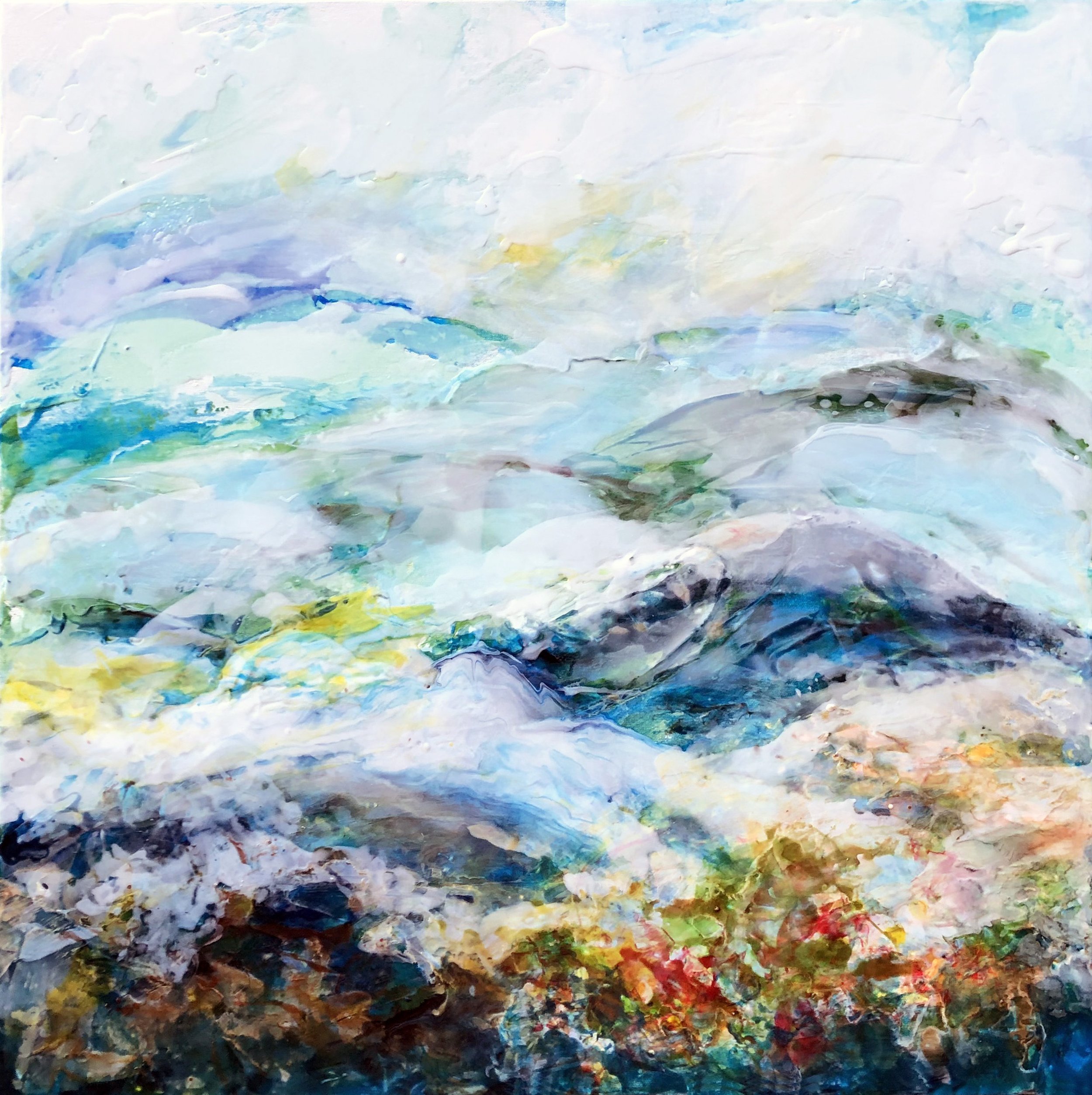
This month’s featured work is Calm Water, a 36x36 acrylic on canvas that captures the gentle ebb and flow of tides. The painting is a meditation on the quiet power of water, a reflection on its ceaseless movement.

As summer continues to unfold, I wanted to share a few things that have been fueling my creative spirit.

BOOKS
Rick Rubin’s The Creative Act: The Way of Being speaks to creativity as a living, breathing practice. Over the past 8 months, I've found myself returning to its pages often, recommending it to anyone who seeks a deeper connection to their creative self. An accidental coffee spill became an invitation to create—turning a mishap into an artful moment, I painted with the coffee, allowing the stain to become part of the journey.

In a different yet equally intriguing way, Toni Tipton-Martin’s Juke Joints, Jazz Clubs & Juice offers a fascinating journey through history with recipes that narrate their own stories. I’m taking my time exploring the book, finding new discoveries in each recipe.

FOOD & DRINK
Summer brings the sweetest surprises. I recently discovered the Black Diamond watermelon, with its deep red flesh that tastes like the essence of summer itself.

Last weekend, I mixed up a Peach Mint Julep from the Juke Joints cookbook. The addition of ginger simple syrup was a delightful surprise, making it the perfect complement to a warm evening, shared with friends on the screened-in porch.

PODCASTS
The Ezra Klein Show recently featured an insightful interview with Tim Walz on August 2, just before his selection as Kamala Harris’s VP running mate. It’s a thought-provoking conversation, worth the listen.

MUSIC
Blues artist Michael van Merwyk has been on repeat for me this summer. His track “Blue River Rising” resonates with a soulful depth that mirrors the blues of the season.

I’m heading out for a 10-day solo art retreat near Lake Michigan, ready to see what the quiet will reveal. Here’s to a season of inspiration and serenity for you as well.

Comment

TREASURES 24x24 Acrylic on Canvas

THROUGH LINE

July 18, 2024

Last week in Ann Arbor, I attended a panel discussion on Elizabeth Youngblood’s solo show, “Syntax,” at the Stamps Gallery. Elizabeth, who taught one of my design classes at the University of Michigan, has created a diverse range of works over four decades, including drawings and mixed-media pieces. She emphasized a “through line” in her work, which I could see and feel in the black, white, gray lines, shapes, and patterns that persist in her design and fine arts, along with a sense of calm when viewing the work.

We tend to think of a “through line” in terms of film or literature, but this concept resonated with me as something that can persist through creative work over decades.

Reflecting on my own creative journey, I realized my “through line” began in childhood with a love for textures in nature and textiles, and the unique colors found in older items. We all have through lines, threads, or recurring themes in our lives.


Comment
Prev / Next

If you have any questions or inquires on my paintings please email me.  

McMillen.Marcia@gmail.com
or call 859-760-2558

Subscribe to Blog

Sign up with your email address to receive creative inspirations, insights and thoughts.

We respect your privacy.

Thank you!
No results found